
Sommer Lab
Our laboratory studies circuits for cognition, with the goal of answering a fundamental question in neuroscience: How do the many, diverse parts of the brain interact to achieve visual perception and behavior? We focus on the role of the frontal cortex and its communication with other cortical and subcortical areas.
Techniques used in the lab include single neuron and population-level electrophysiology, optogenetics and other genetic methods, psychophysics, and computational modeling.
To translate our basic research into therapies for psychiatric and motor disorders, we apply our techniques to improve transcranial magnetic stimulation (TMS) and the efficacy of viral vectors for gene therapies. Members of the lab come from a wide range of disciplines including biomedical and electrical engineering, neurobiology, neuroanatomy, computer science, and more. Since the research done in our lab is highly interdisciplinary, our lab often collaborates with departments throughout Duke as well as with other institutions.
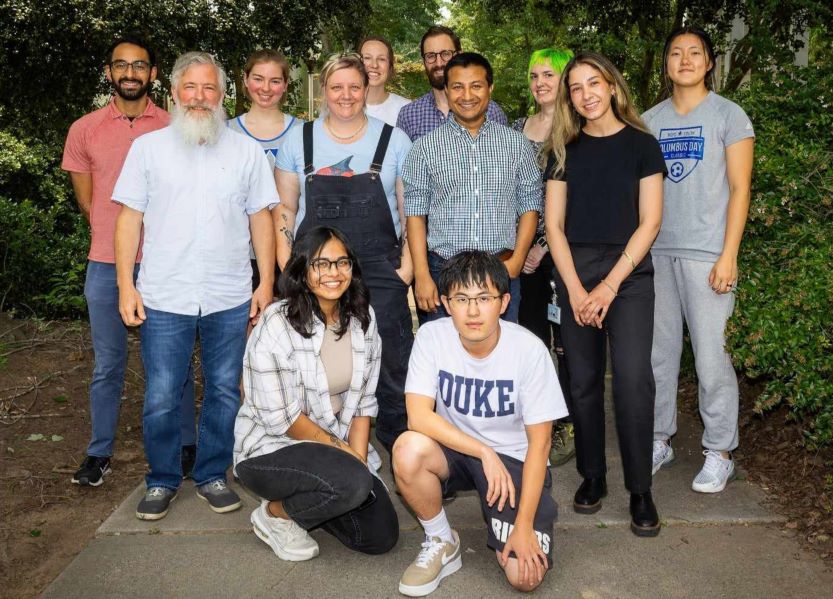
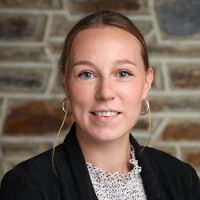
Lab Members




Alumni
Research Scientists
Corrie Camalier (2018-2019)
Postdoctoral Fellows
Suva Roy (Sponsored guest post-doc from Field lab at UCLA) 2023
Martin O. Bohlen (Pfizer-NCBiotech Fellow; Hartwell Foundation Biomedical Research Award Fellow. Current Research Scientist in Sommer Lab) 2016-2022
Vincent Prevosto, Ph.D. 2010-2020
Zachary Abzug 2018
Hrishikesh Rao 2017
Michael J. Koval, Ph.D. 2012-2014
Matthew A. Smith, Ph.D. (University of Pittsburgh) 2007-2010
Robin C. Ashmore, Ph.D. (University of Pittsburgh) 2007-2010
Jefferson Provost, Ph.D. (University of Pittsburgh) 2007-2008
Charlotte Taylor, Ph.D. (University of Pittsburgh) 2005-2006
PhD Alumni
Hala El-Nehal (NIH F31 NRSA Fellow; BME, MS 2016-2017. Ph. D candidate. Defended on March 24, 2025. Title: Oculomotor Roles of the Claustrum and its Projection to Frontal Cortex in Primates) 2018-2025
Anthony Alers (NIH F31 NRSA Fellow; BME Ph D. Candidate. Defended April 4, 2024. Title: Neural basis of visuomotor learning in the frontal eye field: an integrated computational and neurophysiological approach) 2016-2024
Raveena Kothare (Duke BME Howard G. Clark III Fellow; BME Ph.D. candidate; finished with an MS in BME) 2016-2023
Divya Subramanian (Neurobiology Ph.D. candidate, defended on March 24, 2022. Title: Contributions of Bayesian and Discriminative Models to Active Visual Perception across Saccades) 2016-2022
Joshua Stivers (Psychology & Neuroscience Ph.D. candidate, co-mentored with Roberto Cabeza) 2018-2021
Zachary Abzug (NSF Graduate Research Fellow; Duke Scholars in Neuroscience Program; BME Award for Outstanding Doctoral Dissertation; BME Ph.D. candidate, defended on November 3, 2017. Title: The Neurocomputational Basis of Serial Decision-Making) 2011-2017
Hrishikesh Rao (NIH F31 NRSA Fellow; NSF Graduate Research Fellow; IGERT WISeNet Fellow; BME Ph.D. candidate, defended on October 14, 2016. Title: Bottom-up and Top-down Mechanisms of Visually-Guided Movements) 2011-2016
Ramanujan Raghavan (Neurobiology Ph.D. candidate; co-mentored with Steve Lisberger; defended dissertation on October 7, 2016. Title: Analysis of Purkinje Cell Responses in the Oculomotor Vermis during the Execution of Smooth Pursuit Eye Movements) 2011-2016
Paul Middlebrooks (University of Pittsburgh; NIH F31 NRSA Fellow; Neuroscience PhD candidate, defended May 18, 2011. Title: Neuronal Correlates of Metacognition in Primate Frontal Cortex) 2006-2011
SooYoon Shin (Neuroscience PhD candidate, defended May 20, 2011. Title: Role of the Primate Basal Ganglia in Saccadic Eye Movements. U. of Pittsburgh) 2005-2011
J. Patrick Mayo (Neuroscience PhD candidate, defended March 15, 2011. Title: Neuronal Encoding of Brief Time Intervals in the Visual System. U. of Pittsburgh) 2005-2011
Trinity Crapse (Neuroscience PhD candidate, defended September 23, 2010. Title: Neuronal Mechanisms for Evaluating the Visual Scene across Saccades. U. of Pittsburgh) 2005-2010
PhD rotation students
Tracey Lee (Rotation GPMED) 2024
Michael Harris (GPMED) 2024
Ergi Spiro (Cognitive Neuroscience program) 2023
Kennedy Coates (Neurobiology program) 2023
Alev Brigande (Neurobiology program) 2022
Joshua Stivers (Cognitive Neuroscience program) 2018
David Murphy (Cognitive Neuroscience program) 2016
Divya Subramanian (Cognitive Neuroscience program) 2015
Sam Brudner (Cognitive Neuroscience program) 2015
Jeffrey Mohl (Neurobiology program) 2014
Charlie Giattino (Cognitive Neuroscience program) 2014
Benjamin Geib (Cognitive Neuroscience program) 2013
Jake Heffley (Neurobiology program) 2013
Hanna Oh (Cognitive Neuroscience program) 2013
Caroline Drucker (Neurobiology program) 2012
Yilei Cai (Neurobiology program) 2012
Cassie Kozyrkov (Cognitive Neuroscience program) 2011
Joseph Barter (Cognitive Neuroscience program) 2011
Masters Students
Michael Hamway (BME M.Eng. Program) 2024
Alex Qian (Spring 2024 BME MS/MEng Research Fellow; BME M.S. Program) 2023-2024
Cassie Hammond (Spring 2023 BME MS/MEng Research Fellow; BME M.S. Program) 2023-2024
Kiran Shehnaz Kaur (BME M.S. Program) 2023
Garima Iyer (BME M.S. Program) 2023
Zhixing (Vincent) Dai (Fall 2022 BME MS/MEng Research Fellow; BME M.S. Program) 2021-2022
Jingwen Deng (2020 Dean’s Research Award; 2020 BME MS/MEng Research Fellowship; BME M.S. Program) 2020-2021
Adrianna Battle (BME M.S. Program) 2019-2020
Lucy Liang (BME M.S. Program) 2019-2020
Aoxue (Mia) Miao (BME M.S. Program) 2018-2020
Lucas Hoffman (BME M.S. Program) 2018-2019
Xiaoyu Tong (BME M.S. Program) 2018-2019
Zisheng (Jason) Liang (BME M.S. Program) 2018
Richard Chen (BME M.S. Program) 2018
Yi Zhao (BME M.S. Program) 2017-2018
Brandyn Wong (BME M.S. Program) 2017-2018
Josh Wu (BME 4+1 M.S. program) 2016-2018
Hala El-Nahal (BME MS-MEng Research Fellow; BME M.S. Program, continued on as PhD Student in Sommer Lab) 2017
Neerav Goswami (BME M.S. program, Currently a PhD student in Sommer Lab) 2015-2017
Erinn Grigsby (BME M.S. program, successful oral defense of dissertation on March 24, 2015. Title: The Effects of Transcranial Magnetic Stimulation (TMS) on the Neural Activity of Awake Non-Human Primates) 2013-2015
Dennis Wong (BME M.S. program) 2015-2017
Matthew Frank (BME M.S. program) 2015
Melina Smith (BME 4+1 M.S. program) 2014-2015
Zachary Abzug (NSF Graduate Research Fellow; received MS on way to PhD) 2014
Kimi Rafie (BME 4+1 M.S. program) 2013-2014
Undergraduate Alumni
Lauren Strauch 2025
Dilnaz Dyussengaliyeva 2025
Srinjoyi Lahiri 2025
Sera Balkir 2025
Dillion Heffernan 2024
Carter Levine 2024
Darienne Rogers 2024
Neyla Kirby 2023
Miles Bradley 2022-2023
Apoorva Das 2020-2023
Angie Xie 2021-2022
Amber Brooks 2020-2023
Rahul Mukherji 2020-2021
Philip Cho 2018-2021
Olivia Leggio 2021
Gabriel Goldhagen 2020
Veronica Yuziuk 2019-2020
Jason Chou (Pratt Fellow; Grand Challenges Scholar) 2018-2020
Brianna McCollum (REU Fellow from Tennessee State University) 2019
Vincent Peng 2018-2019
Luiza Wolf 2018-2019
Mackenzie Marques 2018-2019
Karen Ou 2018-2019
Mary Zhang 2016-2019
Sarah Proctor (BioCoRE Undergraduate Scholar) 2016-2019
Jin Soo (Andrew) Byun (Computer Science) 2017-2018
Zongyu (Zoey) Li 2018
McKenzie Middlebrooks (Neuroscience Honors thesis project) 2016-2017
Amy Xiong (Grand Challenges Scholar) 2016-2017
Pum Wiboonsaksakul (Pratt Fellow) 2016-2017
Jinsu “Jason” Kim (Pratt Fellow; Grand Challenges Scholar; Walter J. Seeley Scholastic Award; Leonardo da Vinci Award; $25k in VentureWell grants for startup (co-founder/lead engineer, Physao; Graduated with Distinction) 2015-2016
Andrew Toader (Pratt Fellow; Graduated with Distinction) 2015-2016
Minyoung Ryoo (Pratt Fellow; Grand Challenges Scholar; Accenture Scholar; Graduated with Distinction) 2015-2016
Andrew Freyberger (Pratt Fellow) 2015-2016
Kimberly Eddleman 2015-2016
Gehua Tong (BME/Neuroscience dual major) 2015
Melina Smith (Pratt Fellow; Grand Challenges Scholar; featured speaker at White House BRAIN Initiative Conference in 2014) 2014-2015
Juwan Hong (Pratt Fellow) 2014-2015
Brie Jackson (BioCoRE Undergraduate Scholar) 2014
Jessica Cao (Pratt Fellow; Graduated with Distinction) 2013-2014
Amit Vora (Pratt Fellow; Graduated with Distinction) 2013-2014
Fred Shen (Pratt Fellow; Graduated with Distinction) 2013-2014
Radu Darie (Pratt Fellow; Grand Challenges Scholar; Graduated with Distinction) 2012- 2014
Frank Lee (Pratt Fellow) 2012-2014
Cole Arora (Pratt Fellow) 2012-2014
Kenneth Padilla (REU Fellow from Puerto Rico) 2013
Erinn Grigsby (Pratt Fellow) 2011-2013
Kimi Rafie (Pratt Fellow; Master’s student, graduated 2014) 2011-2013
Jennifer Villa (Pratt Fellow; Walter J. Seeley Scholastic Award; Leonardo da Vinci Award) 2012-2013
Juan San Juan (Pratt Fellow) 2011-2013
Brian Kohen 2011-2013
Nicholas Jordan (summer student from Case Western University) 2012
Qifang (Yvonne) Bi 2011-2012
Sean Sketch (REU Fellow from Princeton University) 2011
YiShin Chang 2011
Catherine Hartman (went on to be a graduate student at Harvard University) 2010
Amie DiTamasso 2009-2010
High School Researchers
Riya Sinha 2024
Janie Qing 2024
Grishma Patel 2018-2019
Amy Cheng 2018
Surasya Guduru 2017
Anna Hattle 2015-2016
Bailey Blankenship 2014-2015
Associates in Research
Tierney Daw 2019-2021
Mackenzie Marques 2019-2020
Neerav Goswami (Currently a PhD student in Sommer Lab) 2019-2020
Brandyn Wong 2019
Hala El-Nahal (continued on to graduate as a PhD student in Sommer Lab) 2018
Melina Smith 2015-2017
Jerry Dahlke 2013-2014
Frank W. Petraglia III 2010-2012
Kedar Prabhudesai 2011-2012
Tom Heil 2011
Volunteers
Ashley Ontiri 2024-2025
Sommer Research
Team Corollary Discharge
The image of the world projected onto our retinas is jumpy because we frequently make rapid eye movements called saccades. But, somehow, the brain transforms this chaotic information into a continuous, stable percept. A key factor in this process is the relay of eye movement information, or corollary discharge, to the visual system. We study circuits for corollary discharge and their impact on visual processing using a combination of psychophysics, neural recordings, and computational robotics. In addition to revealing a fundamental component of visual perception, the results inform methods for stabilizing information in systems that use mobile cameras and other sensors.
Contact: Marc Sommer
Team Virus
New genetic technologies have revolutionized neuroscience, but primarily in small animal models such as mice. In the primate brain, genes need to be delivered by viruses, but making this work reliably has been surprisingly difficult for the field. The challenges have slowed down both viral-mediated research in non-human primates and gene therapies in humans. Our goal is to improve viral technologies for non-human primate research by evaluating the safety and efficacy of various viruses and their serotypes, improving the reliability of the viruses using techniques such as directed evolution and immunosuppression, mapping neural circuits with viruses that spread beyond the site of injection, and validating the functionality of the resulting tools for research and therapy.
Contact: Martin Bohlen
Team Optogenetics
With our improved viral methods, we are applying genetic technologies to control the activity of single neurons and specific neuronal populations using light. This work extends from rodent models to non-human primates. Our goal is to modulate the activity of very specific neuronal populations and circuits to determine their roles in cognition and behavior. Current projects include optogenetic studies of a specific class of retinal cells that project to the brainstem and a subset of neurons in the claustrum that project to prefrontal cortex. Much of this work is conducted in behaving animals to assess how optogenetic activation or inhibition of neural circuits affect perception, cognition, and action.
Contact: Hala El-Nahal (claustrum) or Marija Rudzite (retina)
Team TMS
Transcranial magnetic stimulation (TMS) is a safe, non-invasive form of neuromodulation in which a coil is placed near the head to produce a transient magnetic field that, in turn, induces a time-varying electric field in the brain. Although TMS is approved by the FDA for treatment of depression and migraine and is used widely in cognitive research, its underlying biological mechanisms of action are still poorly understood. Our lab investigates the neural basis of TMS effects to establish principles for rational design of its clinical applications. Our approach is to study the effects of various TMS protocols on single neurons and circuits in the rhesus macaque brain.
Contact: Neerav Goswami
Sommer Teaching
Current Courses
- BME 301L/NEUROSCI 301L: Biolectricity
- BME 517/NEUROSCI 507: Neuronal Control of Movement
- BME 790L: Bioelectrical Engineering
- NEUROBIO 720C: Concepts in Neuroscience II - Sensory/Motor Integration
- NEUROBIO 760S: Principles of Cognitive Neuroscience II
Sommer Publications
Goetz, Stefan M., Bryan Howell, Boshuo Wang, Zhongxi Li, Marc A. Sommer, Angel V. Peterchev, and Warren M. Grill. “Isolating two sources of variability of subcortical stimulation to quantify fluctuations of corticospinal tract excitability.” Clin Neurophysiol 138 (February 24, 2022): 134–42. https://doi.org/10.1016/j.clinph.2022.02.009.
Caruso, Valeria C., Daniel S. Pages, Marc A. Sommer, and Jennifer M. Groh. “Compensating for a shifting world: evolving reference frames of visual and auditory signals across three multimodal brain areas.” Journal of Neurophysiology 126, no. 1 (July 2021): 82–94. https://doi.org/10.1152/jn.00385.2020.
Liu, Sicong, Jillian M. Clements, Elayna P. Kirsch, Hrishikesh M. Rao, David J. Zielinski, Yvonne Lu, Boyla O. Mainsah, et al. “Psychophysiological Markers of Performance and Learning during Simulated Marksmanship in Immersive Virtual Reality.” J Cogn Neurosci 33, no. 7 (June 1, 2021): 1253–70. https://doi.org/10.1162/jocn_a_01713.
Tremblay, Sébastien, Leah Acker, Arash Afraz, Daniel L. Albaugh, Hidetoshi Amita, Ariana R. Andrei, Alessandra Angelucci, et al. “An Open Resource for Non-human Primate Optogenetics.” Neuron 108, no. 6 (December 23, 2020): 1075-1090.e6. https://doi.org/10.1016/j.neuron.2020.09.027.
Cushnie, Adriana K., Hala G. El-Nahal, Martin O. Bohlen, Paul J. May, Michele A. Basso, Piercesare Grimaldi, Maya Zhe Wang, Marron Fernandez de Velasco Ezequiel, Marc A. Sommer, and Sarah R. Heilbronner. “Using rAAV2-retro in rhesus macaques: Promise and caveats for circuit manipulation.” Journal of Neuroscience Methods 345 (November 2020): 108859. https://doi.org/10.1016/j.jneumeth.2020.108859.
Bohlen, Martin O., Thomas J. McCown, Sara K. Powell, Hala G. El-Nahal, Tierney Daw, Michele A. Basso, Marc A. Sommer, and R Jude Samulski. “Adeno-Associated Virus Capsid-Promoter Interactions in the Brain Translate from Rat to the Nonhuman Primate.” Human Gene Therapy 31, no. 21–22 (November 2020): 1155–68. https://doi.org/10.1089/hum.2020.196.
Gamboa Arana, Olga Lucia, Hannah Palmer, Moritz Dannhauer, Connor Hile, Sicong Liu, Rena Hamdan, Alexandra Brito, et al. “Intensity- and timing-dependent modulation of motion perception with transcranial magnetic stimulation of visual cortex.” Neuropsychologia 147 (October 2020): 107581. https://doi.org/10.1016/j.neuropsychologia.2020.107581.
Gamboa, Olga Lucia, Alexandra Brito, Zachary Abzug, Tracy D’Arbeloff, Lysianne Beynel, Erik A. Wing, Moritz Dannhauer, et al. “Application of long-interval paired-pulse transcranial magnetic stimulation to motion-sensitive visual cortex does not lead to changes in motion discrimination.” Neurosci Lett 730 (June 21, 2020): 135022. https://doi.org/10.1016/j.neulet.2020.135022.
Gamboa Arana, Olga Lucia, Hannah Palmer, Moritz Dannhauer, Connor Hile, Sicong Liu, Rena Hamdan, Alexandra Brito, et al. “Dose-dependent enhancement of motion direction discrimination with transcranial magnetic stimulation of visual cortex,” June 15, 2020. https://doi.org/10.1101/2020.06.14.151118.
Akbar, Navid, Mathew Yarossi, Marc Martinez-Gost, Marc A. Sommer, Moritz Dannhauer, Sumientra Rampersad, Dana Brooks, Eugene Tunik, and Deniz Erdoğmuş. “Mapping Motor Cortex Stimulation to Muscle Responses: A Deep Neural Network Modeling Approach.” In The ... International Conference on Pervasive Technologies Related to Assistive Environments : Petra ... International Conference on Pervasive Technologies Related to Assistive Environments, Vol. 2020, 2020. https://doi.org/10.1145/3389189.3389203.