
Grandl Lab study reveals how Piezo2 variants detect force with different sensitivities
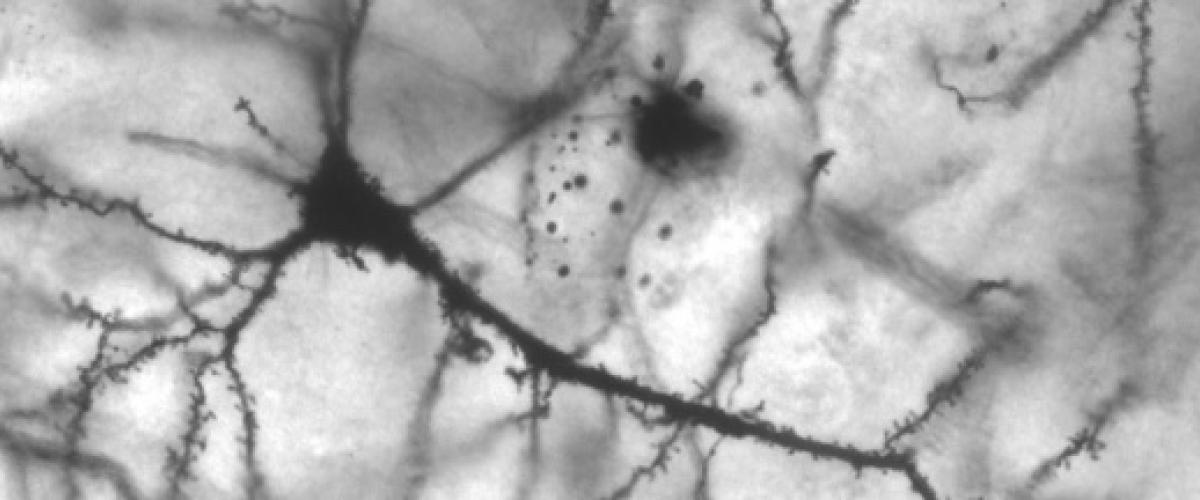
A new study from Grandl Lab and first author Michael Sindoni has discovered that different versions of the Piezo2 protein—the body's key sensor for touch and internal mechanical signals—respond to physical forces in different ways. Piezo2 helps us feel touch, sense body position, monitor lung expansion, and regulate digestive movement. The study found that a small section of the protein, called exon 35, makes certain Piezo2 variants much more sensitive to stretching and pressure on cell membranes.

Naumann Lab study finds early gut-brain signals driven by stretch, not chemistry
In a new paper published in iScience, a team led by Neurobiology's Eva Naumann and former Neurobiology graduate student Minel Arinel shows that rapid gut-to-brain communication is already functional in early development, using larval zebrafish as a model. The researchers developed a novel method to deliver enteric stimuli during calcium imaging, revealing that gut distension alone drives widespread neural responses. These findings underscore mechanosensation as a dominant visceral stimulus at this developmental stage.

Ruiz Lopez, Li, Powley win Ruth K. Broad Foundation research awards
Rising third year graduate students Brayan Ruiz Lopez (Southwell Lab) and Sharon Powley (Scott-Hewitt Lab), and rising fifth year student Shuoyi Li (Mooney Lab), have each been selected to receive a 2026 Ruth K. Broad Foundation Research Award.

Yuan reflects on the value of the Neurobiology Career Series
Rising third-year graduate student Ben Yuan (Nuo Li Lab) initially volunteered to co-organize the Neurobiology Career Series as a way to gain networking experience. Through his work with the series, he reflects that engaging with speakers and peers offered valuable insight into the diverse—and often nonlinear—paths within neuroscience careers.

Yang Lab study links gene regulation to neural circuits and behavior in Drosophila
A new study from the Yang Lab shows how natural genetic variation can reshape neural circuits to influence decision-making.

Graduation 2026: Congratulations to our neurobiology graduates
Congratulations to the 14 PhD students in neurobiology who defended dissertations in 2025 and 2026 and were eligible to participate in graduation ceremonies on Sunday, May 10, 2026. They were among more than 400 students from the Duke University School of Medicine who graduated, marking the successful culmination of their hard work and dedication.
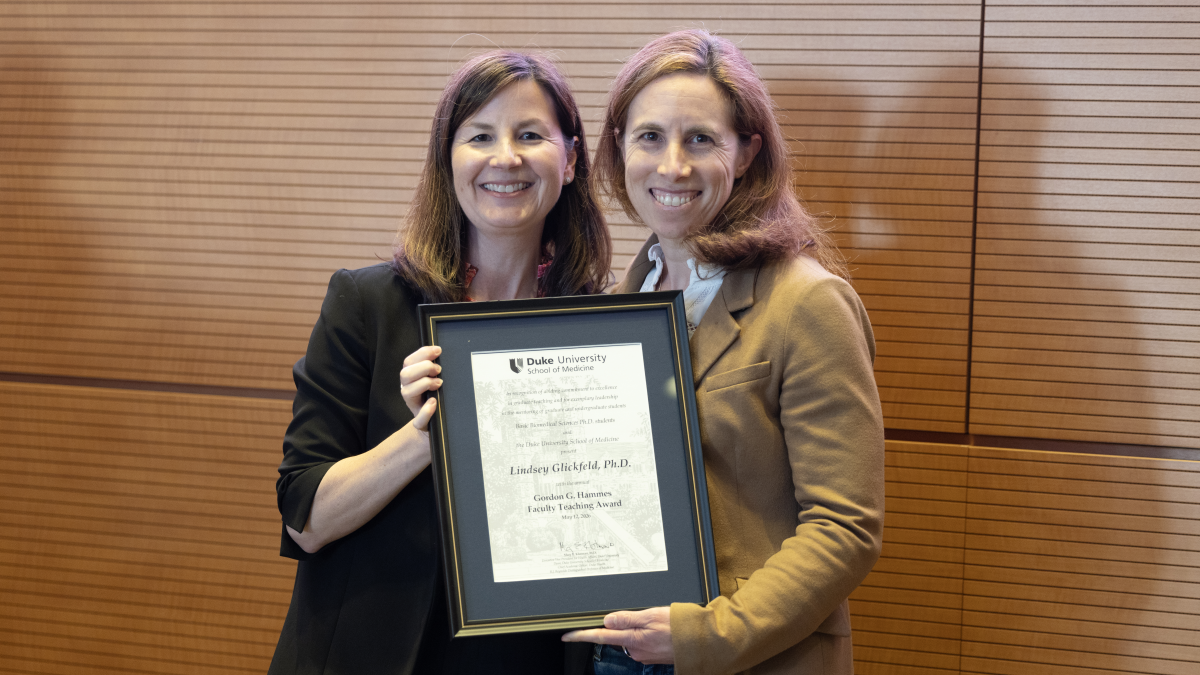
Glickfeld honored with 2026 Faculty Award
Lindsey Glickfeld, PhD, was awarded the Gordon Hammes Faculty Teaching Award for sustained excellence in teaching and mentoring graduate students in the basic sciences.

New finding from Mooney Lab pinpoints the brain's starting point for learning
In a new study of how young songbirds learn to sing, a team led by neurobiology faculty Richard Mooney and John Pearson, postdoctoral researcher and first author Drew Schreiner, and including neurobiology alum Samuel Brudner, found that what sounds like random practice is actually a structured learning process, similar to how humans learn skills like speaking or playing music. They discovered that early learning happens at a very specific connection in the brain, showing exactly where learning begins. The research also highlights a key balance in learning: experimenting freely at first, then gradually refining skills into consistent, polished behavior.

Dunn wins SFARI award
Neurobiology training faculty member Tim Dunn has been selected to receive a 2025 Data Analysis award funded by the Simons Foundation Autism Research Initiative (SFARI).

Huang Lab study reveals the brain work behind every bite
When you lift food to your mouth, your brain syncs movements of
hands, arms, lips, tongue and jaw. Scientists now say they’ve identified the brain circuitry that makes that everyday act possible. In a new study in mice, a team led by Josh Huang, PhD, identified a previously unknown motor cortex region that synchronizes hand and mouth movements during feeding. Activating the area triggered lifelike eating motions. Shutting parts of it down disrupted the behavior. The work could help explain how complex actions break down in conditions such as stroke or Parkinson’s disease.